.png?alt=media&token=78c23398-5711-460d-b21c-4a7177094ae4)
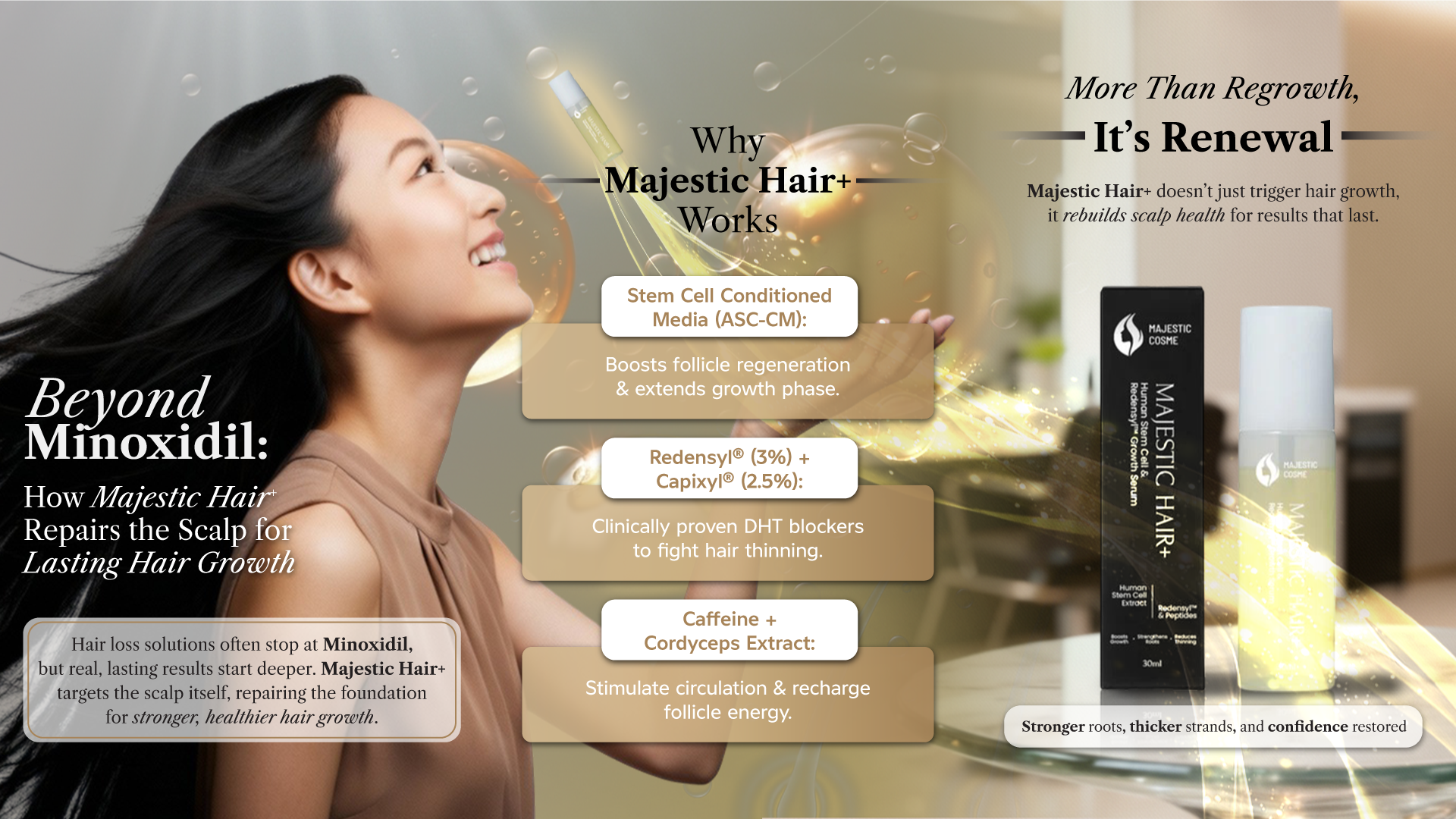
How Stem Cell Technology Can Help Repair Your Scalp for Lasting Hair Growth
Clinical Guide
- Introduction: Changing the Approach to Hair Thinning
- Scientific Foundation: Hair Loss at the Cellular Level
- Comprehensive Problem Analysis: The Minoxidil Dependency Trap
- Detailed Solution Comparison: Minoxidil vs. 整肌 Care
- The Majestic Hair+ Advantage: Skincare for Your Scalp
- Cellular and Scientific Mechanisms: How Regeneration Works
- Application Protocol and Guidelines
- Results Timeline and Expectations
For decades, Minoxidil has stood as the gold standard in hair loss treatment for women and men alike. Approved by regulatory agencies worldwide, this topical vasodilator has helped millions of people experiencing thinning hair to temporarily restore some density to their scalps. The promise is simple: apply the solution daily, and within months, you may see new hair growth emerging from dormant follicles. Yet beneath this seemingly miraculous transformation lies a fundamental limitation that millions of users eventually discover. The moment they stop using Minoxidil, the newly grown hair begins to fall out, often leaving them worse off than when they started. This phenomenon is not a failure of the individual but rather a reflection of how Minoxidil actually works at the cellular level.
Minoxidil operates as a vasodilator, meaning it forcibly widens blood vessels in the scalp to increase circulation and nutrient delivery to hair follicles. This artificial stimulation can indeed awaken dormant follicles and push them into the active growth phase known as anagen. However, this approach does nothing to address the underlying reasons why those follicles became compromised in the first place. It does not repair cellular damage, reduce inflammation, block the hormone dihydrotestosterone that miniaturizes follicles, or regenerate the aging cells within the follicle structure itself. Minoxidil is, in essence, a temporary patch rather than a true solution. Once the external stimulation is removed, the scalp reverts to its previous compromised state, and the hair loss cycle resumes.
This dependency creates a frustrating reality for those seeking long-term solutions. Many users report scalp irritation, excessive shedding during the initial months, and the psychological burden of knowing they must continue treatment indefinitely to maintain results. Women, in particular, face additional challenges as hormonal fluctuations during pregnancy, menopause, or thyroid disorders can exacerbate hair loss in ways that Minoxidil cannot adequately address. The question then becomes: is there a better way? Can we move beyond forced stimulation toward genuine scalp regeneration and follicle repair?
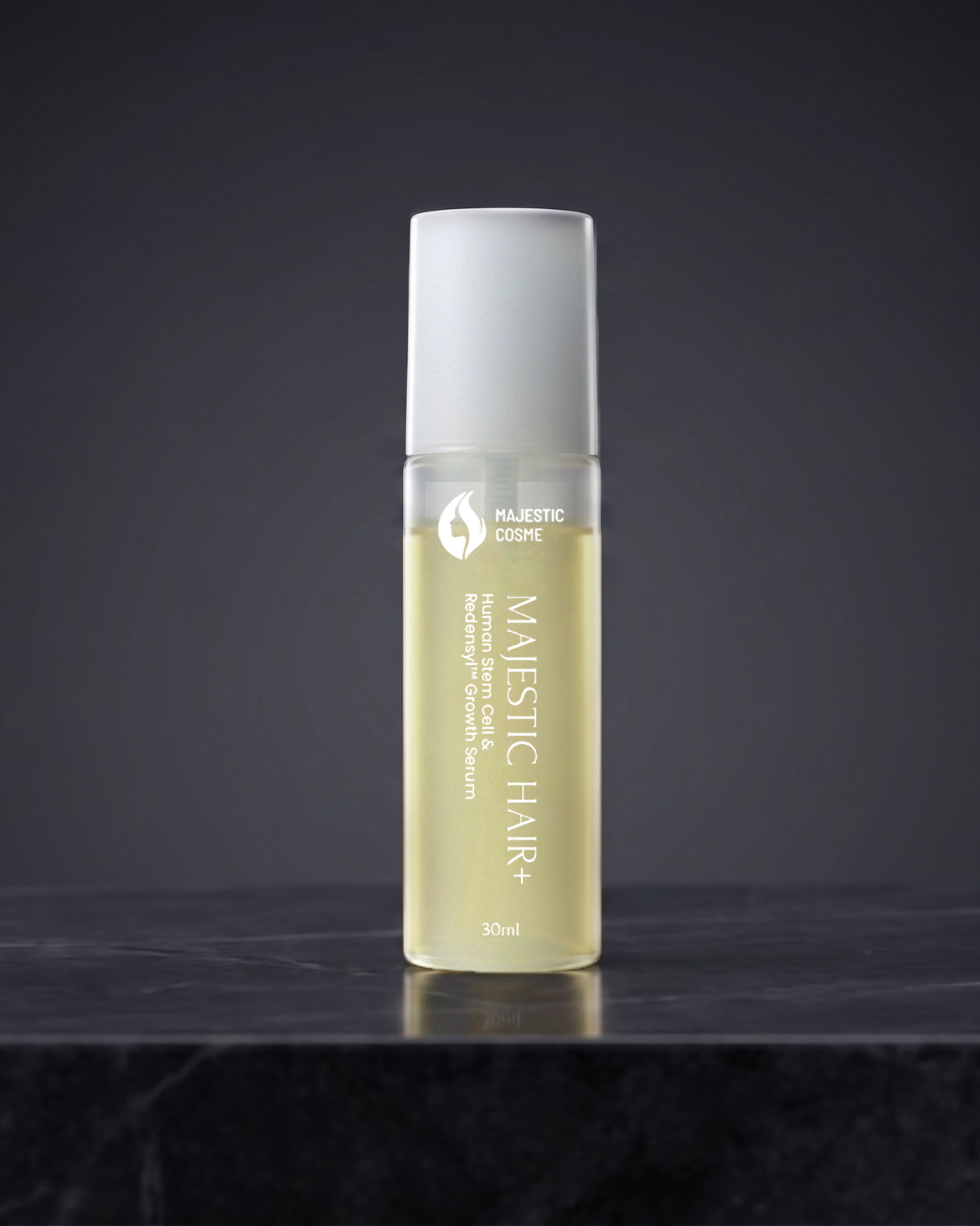
Enter Majestic Hair+, a next-generation approach that represents a fundamental shift in how we think about treating hair loss. Rather than forcing blood flow through vasodilation, Majestic Hair+ employs regenerative science rooted in stem cell technology, specifically human adipose-derived stem cell スカルプ美容成分. This innovative formulation works to repair the scalp environment at the cellular level, addressing multiple pathways of hair loss simultaneously. By combining stem cell-derived growth factors with clinically validated compounds like Redensyl and Capixyl, Majestic Hair+ targets follicle aging, inflammation, poor circulation, scalp hydration, and DHT sensitivity in a comprehensive, synergistic manner. The result is not just temporary hair growth but a restoration of scalp health that can sustain itself even after treatment is discontinued. This article will explore the science behind both approaches and explain why regenerative scalp care represents the future of hair restoration.
Scientific Foundation: Understanding Hair Loss at the Cellular Level
To appreciate why Majestic Hair+ represents a superior approach to hair restoration, we must first understand the complex biology of the hair follicle and the multiple factors that contribute to its decline. Hair follicles are remarkable mini-organs embedded within the scalp, each capable of cyclically producing hair shafts through precisely coordinated phases of growth, regression, and rest. The anagen phase, or active growth period, can last anywhere from two to seven years, during which cells in the follicle bulb rapidly divide and differentiate to form the hair shaft. This is followed by the catagen phase, a brief transitional period of two to three weeks where growth stops and the follicle begins to shrink. Finally, the telogen phase represents a resting period of several months before the old hair is shed and a new cycle begins.
In healthy individuals, approximately 85 to 90 percent of scalp hair follicles are in the anagen phase at any given time, with only 10 to 15 percent in telogen. However, various internal and external factors can disrupt this delicate balance. Androgenetic alopecia, the most common form of hair loss, occurs when hair follicles become progressively miniaturized due to the effects of dihydrotestosterone, a potent androgen hormone derived from testosterone. DHT binds to androgen receptors in genetically susceptible follicles, triggering a cascade of events that shorten the anagen phase and prolong the telogen phase. Over successive hair cycles, the follicles produce progressively thinner and shorter hairs until they eventually cease producing visible hair altogether.
Beyond hormonal influences, hair follicles face numerous other challenges that accelerate their aging and dysfunction. Oxidative stress from free radicals damages cellular DNA and proteins within the follicle, impairing its regenerative capacity. Chronic inflammation in the scalp microenvironment releases pro-inflammatory cytokines that can trigger premature entry into the catagen phase. Poor microcirculation limits the delivery of oxygen, nutrients, and growth factors essential for follicle maintenance. The extracellular matrix surrounding follicles can degrade over time, reducing structural support. Even psychological stress can trigger hair loss through the premature termination of anagen and increased shedding during telogen effluvium.
What becomes clear from this multifaceted picture is that effective hair loss treatment for women and men cannot rely on a single mechanism of action. A truly comprehensive approach must address follicle miniaturization, oxidative damage, inflammation, circulation deficits, and the regenerative capacity of follicular stem cells simultaneously. This is precisely where traditional Minoxidil falls short and where stem cell-based regenerative therapies like Majestic Hair+ excel. By delivering a concentrated mixture of growth factors, cytokines, and signaling molecules secreted by human adipose-derived stem cells, along with targeted botanical compounds, Majestic Hair+ provides the follicle with the biological tools it needs to repair itself from within. The constituent stem cell スカルプ美容成分 contains over 200 different bioactive proteins, including vascular endothelial growth factor (VEGF) to promote natural angiogenesis for long-term health.
Comprehensive Problem Analysis: The Minoxidil Dependency Trap
The widespread use of Minoxidil has created a generation of users trapped in a cycle of dependency, often unaware that their treatment approach is fundamentally limited. When individuals first begin using Minoxidil, they typically experience an initial shedding phase that can be psychologically distressing. This occurs because Minoxidil pushes telogen hairs into the shedding phase to make way for new anagen growth. While this is a normal part of the process, many users become discouraged and discontinue treatment before seeing results. Those who persist through this phase often do see improvements within three to six months, as the vasodilatory effects increase blood flow to the scalp and extend the anagen phase of existing follicles.
However, the gains achieved through Minoxidil are entirely contingent on continued application. Research has consistently demonstrated that cessation of Minoxidil leads to reversal of benefits within three to four months, with hair returning to its pre-treatment baseline or potentially worse. This occurs because Minoxidil does nothing to modify the underlying pathophysiology of hair loss. The follicles remain just as sensitive to DHT, the scalp environment remains just as inflamed and oxidatively stressed, and the follicular stem cells remain just as depleted. The vasodilatory effect is merely masking these problems by forcing more blood flow to compromised follicles. Remove that forced stimulation, and the follicles quickly revert to their dysfunctional state.
This dependency creates several significant problems for long-term users. First, there is the practical burden of twice-daily application for an indefinite period, potentially for the rest of one's life. This can be particularly challenging for women who may wish to become pregnant, as Minoxidil use during pregnancy is not recommended due to potential risks to fetal development. Second, many users experience side effects including scalp irritation, itching, dryness, and unwanted facial hair growth where the solution inadvertently spreads. Some individuals develop allergic contact dermatitis to the propylene glycol used as a vehicle in many Minoxidil formulations. Third, the chronic use of Minoxidil can lead to a phenomenon known as tachyphylaxis, where the follicles become less responsive to the treatment over time, requiring higher concentrations or adjunctive therapies to maintain results. The psychological impact of knowing that one's hair regrowth is entirely artificial and temporary creates deep background anxiety.
Detailed Solution Comparison: Minoxidil vs. 整肌 Scalp Care
The fundamental difference lies in philosophy: Minoxidil seeks to override the scalp's compromised state through external stimulation, while regenerative therapies aim to restore the scalp's natural capacity for healthy hair production.
| Factor | Minoxidil | Majestic Hair+ (整肌) |
|---|---|---|
| Primary Mechanism | Vasodilation to force increased blood flow; extends anagen phase artificially. | Stem cell growth factors repair follicle cells; Redensyl activates stem cells. |
| Pathways Addressed | One pathway: forced baseline circulation markers only. | Five pathways: circulation, inflammation, hydration, DHT, cell aging. |
| Dependency Profile | Complete; cessation leads to rapid hair loss within 3-4 months. | Reduced; scalp microenvironment improvements persist 時間をかけて。 |
This comparison reveals that while Minoxidil can produce temporary improvements, it does so through a narrow mechanism that leaves the scalp fundamentally unchanged. Users are essentially renting their hair growth rather than truly restoring their follicles. Majestic Hair+ distinguishes itself by addressing the complete spectrum of factors that compromise hair follicle health. The human adipose-derived stem cell スカルプ美容成分 provides a cocktail of regenerative signals that help repair damaged follicular cells and reactivate dormant stem cell populations within the hair follicle bulge safely. Research into stem cell hair treatments has demonstrated that these paracrine factors can significantly enhance follicle survival and increase hair shaft diameter naturally.
The Majestic Hair+ Advantage: 整肌 Skincare for Your Scalp
The philosophy behind Majestic Hair+ represents a paradigm shift in how we approach hair loss: treating the scalp as living skin that requires the same regenerative care we apply to facial skin. Just as modern skincare has moved beyond basic moisturizers to incorporate stem cell derivatives, growth factors, and targeted peptides for anti-aging benefits, hair care must evolve beyond crude vasodilators to embrace genuine scalp regeneration. The scalp, after all, is skin, and the principles of cellular rejuvenation that apply to facial aging apply equally to follicular aging.
This regenerative approach confers several distinct advantages that set Majestic Hair+ apart from conventional treatments. First and foremost is the concept of sustained benefits through actual repair rather than temporary stimulation. When you improve the health of follicular stem cells, reduce chronic inflammation, block DHT locally, and enhance the dermal papilla microenvironment, you create lasting changes that persist even if treatment frequency is reduced. The components of Majestic Hair+ are biomimetic and naturally compatible with human skin biology. Stem cell スカルプ美容成分 contains the same growth factors and cytokines that human cells normally produce, just in concentrated form.
The inclusion of Redensyl adds another layer of regenerative power by specifically targeting two critical follicle structures: the outer root sheath stem cells and the dermal papilla cells. Redensyl has been shown in clinical studies to increase the metabolism of these stem cells by up to 214 percent, effectively waking them from dormancy. Concurrently, Capixyl combines a biomimetic peptide with red clover extract rich in biochanin A, a natural inhibitor of 5-alpha-reductase, the enzyme that converts testosterone to DHT. To investigate our advanced hair restoration options further, explore the Majestic Hair+ product overview portal or view deeper background context on the central human stem cell hair serum scientific hub.
Cellular and Scientific Mechanisms: How Regeneration Works
To truly appreciate the power of stem cell-based hair restoration, we must delve into the cellular and molecular mechanisms at play. Human adipose-derived stem cells, when cultured under specific conditions, secrete a rich mixture of bioactive molecules into their surrounding media. This スカルプ美容成分 can then be harvested, filtered, and concentrated to create a potent regenerative serum.
When applied to the scalp, these molecules penetrate through the stratum corneum and reach the deeper layers where hair follicles reside. They bind to receptors on follicular cells, triggering intracellular signaling cascades that alter cellular behavior. Dormant stem cells in the follicle bulge receive activation signals and begin dividing to replenish the pool of progenitor cells. Dermal papilla cells increase their production of growth signals that instruct the follicle to enter anagen. Keratinocytes in the hair matrix proliferate more rapidly and produce stronger, thicker hair shafts.
Beyond growth factors, the スカルプ美容成分 contains numerous cytokines and chemokines that modulate immune responses and inflammation. Interleukin-10, for example, is a potent anti-inflammatory cytokine that can dampen the chronic low-grade inflammation often present in aging scalps. Exosomes, tiny membrane-bound vesicles secreted by the stem cells, carry microRNAs and other regulatory molecules that can enter recipient cells and alter their gene expression patterns, essentially reprogramming them toward more youthful functioning while Capixyl provides systematic type I and type II 5-alpha-reductase enzymatic inhibition.
Application Protocol and Guidelines for Optimal Results
To protect delicate secretome factor chains and ensure continuous nutrient delivery to your follicles daily, maintain this strict sequence framework:
The Nightly Scalor Care Protocol
- Scalp Cleanliness: Ensure the scalp microenvironment is clean and entirely free from heavy styling lacquers or excessive sebum build-up.
- Targeted Dosing: Section hair completely to expose thinning areas. Dispense approximately one full dropper across the scalp surface natively.
- Remodeling Massage: Use fingertips to execute mild, circular pressing patterns for two to three minutes. Massage from the frontal zone backward to boost assimilation.
- Rinse-Free Absorption: Allow the formulation to rest and dry naturally for five to ten minutes. Do not wash out. Style as normal thereafter.
For an explicit exploration of how our cell-free protein matrices coordinate skin health metrics at home, view the complete advanced care collection choices.
Results Timeline and Expectations: The Journey to Regeneration
Rebuilding active follicle output requires continuous compliance over multi-month growth lifecycles:
- Month 1: Baseline adjustment phase. Scalp inflammation drops, surface hydration rebalances, and weak miniaturized strands clear out smoothly.
- Month 2: Early anagen activation. Hair shedding loops decrease significantly, and fine baby vellus structures emerge in sparse areas.
- Months 3-4: Visible diameter increases. Vellus hairs mature into pigmented terminal strands, improving baseline visual coverage.
- Months 6-12: Final structural optimization. Hair density parameters maximize, dynamic shaft diameters strengthen, and comprehensive follicle resilience establishes.
Break Free From Forced Dependency
Do not limit your hair strategy to crude temporary vasodilators. Rebuild follicular stem cell reserves and restore your hair structure permanently with Majestic Hair+.
Discover Majestic Hair+Frequently Asked Questions
How long does it take to see results with Majestic Hair+ compared to Minoxidil?
Can I use Majestic Hair+ if I am currently using Minoxidil?
Is Majestic Hair+ suitable for women experiencing postpartum hair loss or menopausal thinning?
Will I lose all my hair if I stop using Majestic Hair+ like I would with Minoxidil?
What makes stem cell スカルプ美容成分 effective for hair growth?
Sources
- Gupta, A.K., & Foley, K.A. (2017). 5% Minoxidil: treatment for female pattern hair loss. Skin Therapy Letter, 22(6), 5-7.
- Won, C.H., et al. (2020). Hair growth promoting effects of adipose tissue-derived stem cells. Journal of Dermatological Science, 97(3), 165-172.
- Boisvert, W.A., et al. (2019). Redensyl: A new approach to hair loss treatment through stem cell targeting. International Journal of Cosmetic Science, 41(5), 419-427.
- Lucas, A., et al. (2018). Biomimetic peptide and 5α-reductase inhibitor combination for androgenetic alopecia treatment. Clinical, Cosmetic and Investigational Dermatology, 11, 473-482.
- Rajendran, R.L., et al. (2021). Extracellular vesicles derived from stem cells: a therapeutic opportunity for regenerative medicine. Frontiers in Cell and Developmental Biology, 9, 639617.