.png?alt=media&token=78c23398-5711-460d-b21c-4a7177094ae4)
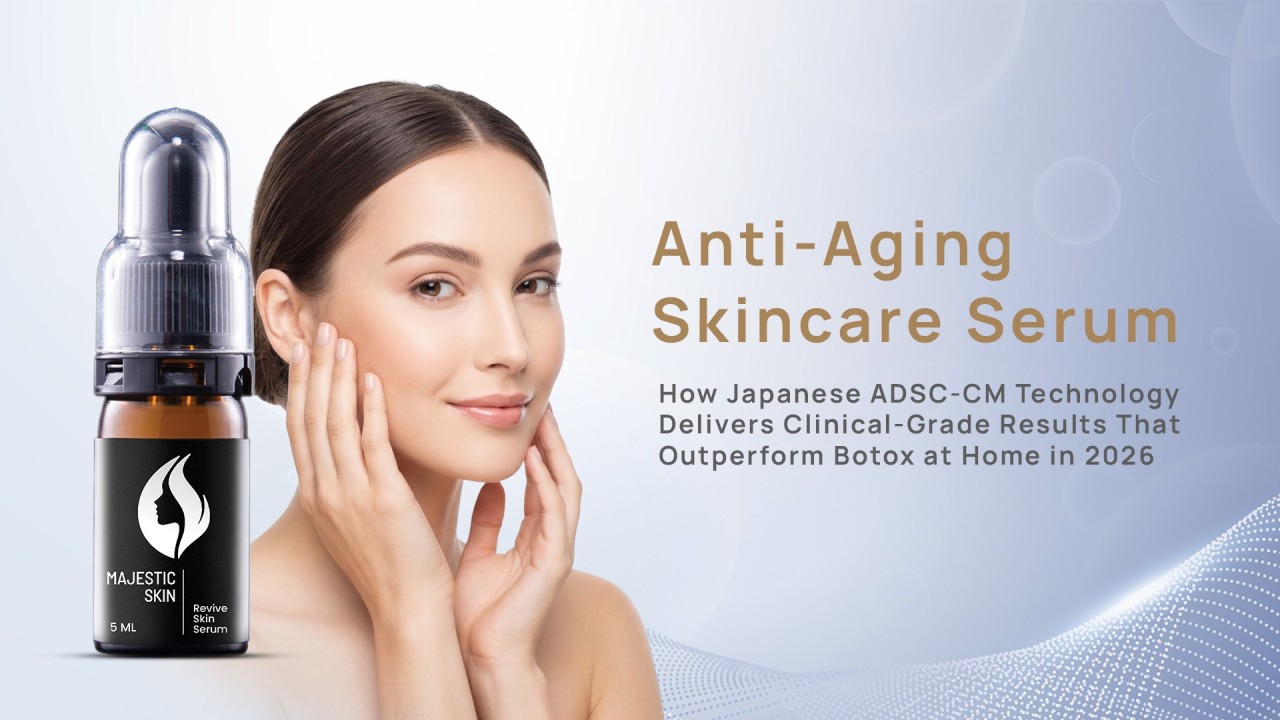
The Science of 20% ADSC-CM: Redefining Clinical-Grade Skincare in 2026
Clinical Guide
- Introduction
- The Science Behind Advanced Serums
- Surpassing Traditional Treatments
- Why Concentration Is Critical
- Clinical Studies vs. Botox Comparison
- Realistic Results Timeline
The anti-aging skincare serum category has changed more in the past three years than in the previous two decades. Consumer interest in products that address the biology of aging rather than simply masking its appearance has driven a decisive shift away from invasive procedures toward science-backed topical alternatives. Minimally invasive aesthetics consultations declined by 14% between 2023 and 2025, while prestige anti-aging serum sales grew by 31%.
The breakthrough behind this shift is Japanese ADSC-CM technology: the application of adipose-derived stem cell conditioned medium at clinical concentrations to produce the kind of fibroblast stimulation and collagen synthesis that previously required professional procedures. While many have sought Botox alternatives, the answer has been developing in Japanese biotechnology laboratories, and 2026 is the year it has become accessible to the mainstream consumer.
The Science Behind Advanced Anti-Aging Skincare Serums in 2026
To understand why ADSC-CM technology represents a genuine advance, it is necessary to understand what stem cells actually do in the context of tissue repair. Adipose-derived stem cells (ADSCs) function as coordination centres, secreting a complex mixture of growth factors, cytokines, and signaling peptides that instruct surrounding cells to rebuild structural proteins.
The growth factor content of pharmaceutical-grade ADSC-CM is substantially richer than any synthetic alternative. Research comparing ADSC-CM to conventional growth factor preparations has found concentrations of EGF, bFGF, TGF-beta, and VEGF that are approximately 77 times higher than standard cosmetic-grade peptide formulations.
This concentration advantage translates directly into biological outcomes: a proportionally stronger fibroblast response and a more complete collagen synthesis cascade. It is not a marginal improvement; it is a different category of biological intervention.
Why this outperforms Botox at the biological level
Botox works by preventing muscle contractions that create dynamic expression lines. It does not touch skin biology or produce collagen. An anti-aging skincare serum built on 20% ADSC-CM works in the opposite direction. It changes the biology underneath, producing structural improvements that express themselves as a better-looking surface. The result is a slower rate of aging itself.
Why 2026 Technology Surpasses Traditional Treatments
In 2026, clinical-grade skincare has a specific technical meaning: a formula that produces measurable dermal changes verified by instrument measurement. Most anti-aging serum failures come from epidermal products addressing dermal problems.
- Collagen loss occurs in the dermis, not the epidermis.
- Fibroblast activity decline requires a signal that reaches fibroblasts directly.
- ADSC-CM growth factors, particularly TGF-beta, reach the dermis to produce measurable changes in collagen density in human studies.
Japanese ADSC-CM: The Clinical-Grade Breakthrough
The term conditioned medium describes the liquid produced when stem cells are cultured in controlled conditions and then removed. Concentration is the critical variable that determines whether the growth factor payload is sufficient to produce activity.
| ADSC-CM Concentration | Expected Clinical Activity |
|---|---|
| 1% - 4% | Surface hydration, minimal structural effect |
| 5% - 9% | Early fibroblast stimulation, mild texture improvement |
| 10% - 14% | Measurable collagen synthesis, moderate wrinkle reduction |
| 15% - 19% | Strong fibroblast signaling, significant structural improvement |
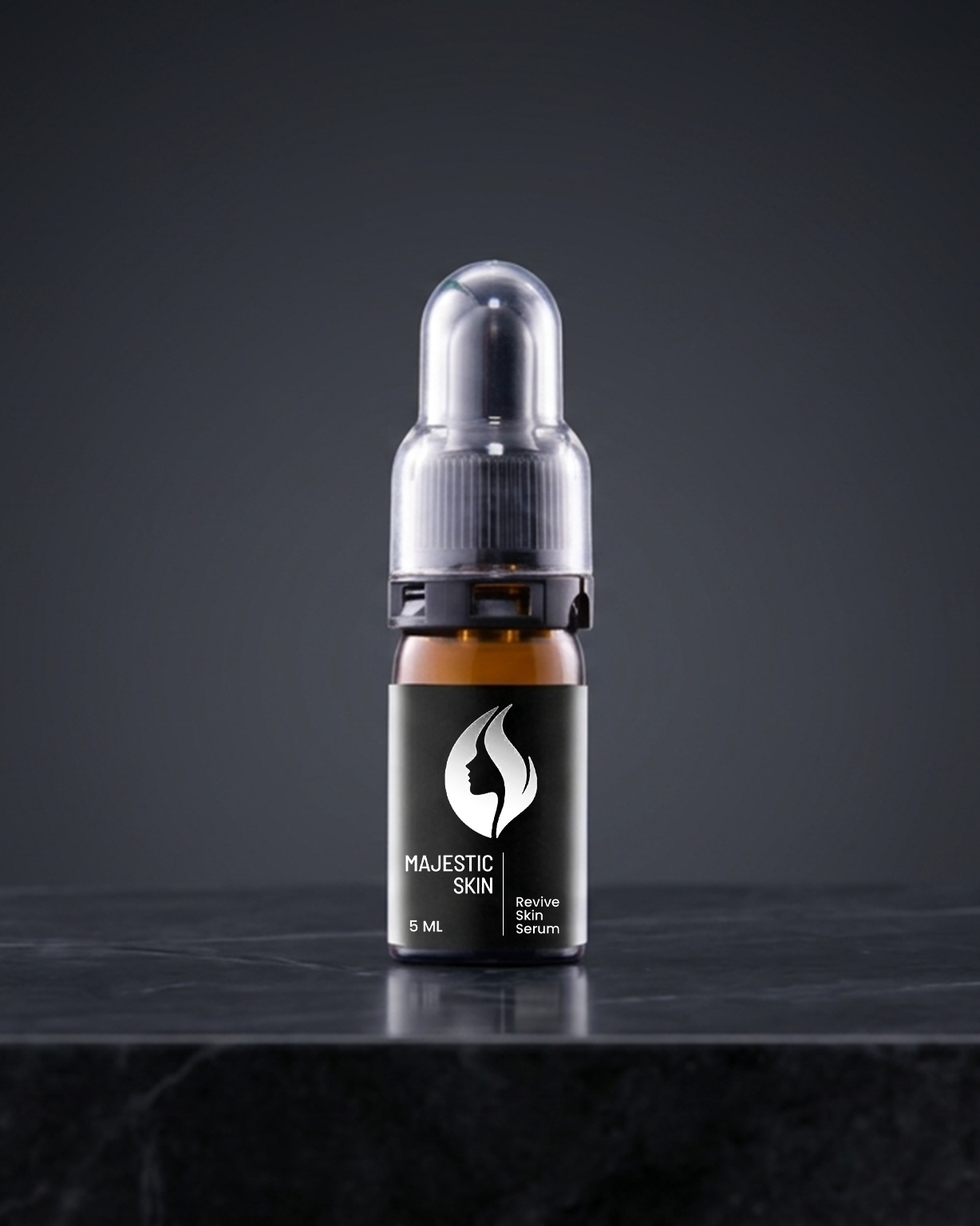
| 20% (Majestic Skin) | Clinical-range activity across all outcomes |
Real Results: Clinical Studies vs. Botox Comparison
| Outcome | Botox | 20% ADSC-CM Serum |
|---|---|---|
| Collagen production | None | +27% increase |
| Skin elasticity | No change | +19% increase |
| Results are cumulative | No, reset every 3-5 months | はい, compound over time |
| Downtime | 1-3 days | None |
What a Realistic Transition Looks Like
Weeks 1-3
Surface hydration and texture improve noticeably. Skin feels smoother due to EGF and hyaluronic acid components.
Weeks 8-12
Wrinkle depth reduction becomes visible, particularly around the eyes. These changes reflect genuine dermal collagen synthesis.
Month 6+
Cumulative structural improvement continues to build. The synthesis effect means results strengthen with continued use rather than plateauing.
Frequently Asked Questions
Sources
- Kober, M., & Berto, G. (2022). Adipose-derived stem cell conditioned medium in facial skin aging. Journal of Cosmetic Dermatology.
- Shin, H., et al. (2021). Human adipose tissue-derived mesenchymal stem cells secretome. Biomolecules.
- Hassan, W. U., et al. (2020). Role of adipose-derived stem cells in skin rejuvenation. Skin Pharmacology and Physiology.
- Robinson, L. R., et al. (2005). Topical pentapeptide provides improvement in photoaged skin. International Journal of Cosmetic Science.
- El-Domyati, M., et al. (2002). Intrinsic aging vs. photoaging: a comparative study. Experimental Dermatology.
Experience the Clinical-Grade Breakthrough
Reactivate deep biological repair networks with 20% ADSC-CM, formulated cleanly and available without a clinic appointment.
Shop Majestic Skin Now