.png?alt=media&token=78c23398-5711-460d-b21c-4a7177094ae4)
.jpg?alt=media&token=6b8c4b43-d474-4d1d-9027-5f330bbb650f)
From Butterfly Skin to Everyday Renewal: Stem Cells and Regeneration
Clinical Guide
- Introduction: The Evolution of Regenerative Medicine
- Scientific Foundation: The Regenerative Architecture of Human Skin
- Comprehensive Analysis: Skin Aging and Repair Challenges
- Detailed Solution Comparison
- The Majestic Skin Advantage
- Cellular and Scientific Mechanisms: How Regeneration Works
- Application Protocol and Guidelines
- Results Timeline and Expectations
In the pristine laboratories of Ruhr University Bochum, Germany, a medical miracle unfolded that would forever change our understanding of human regenerative potential. A seven-year-old Syrian boy, Hassan, arrived at the burn center with a devastating genetic condition called junctional epidermolysis bullosa (JEB). This rare disorder, often referred to as "butterfly skin disease," had left 80% of his skin surface raw, blistered, and failing. Traditional treatments had reached their limits, and Hassan's condition was rapidly deteriorating toward what seemed an inevitable outcome.
What happened next represents one of the most remarkable achievements in regenerative medicine. A team of pioneering researchers, led by Dr. Michele De Luca, embarked on an unprecedented treatment protocol using gene-corrected epidermal stem cells. Over the course of two years, they successfully regenerated Hassan's entire skin surface, creating new, healthy skin that continues to function normally years later. This groundbreaking case, published in Nature in 2017, demonstrated the extraordinary capacity of human stem cells to not just repair, but completely rebuild complex tissue systems.
The implications of Hassan's successful treatment extend far beyond rare genetic disorders. His story illuminates the fundamental regenerative mechanisms that exist within all human skin, mechanisms that modern skincare science is learning to harness and optimize. While most of us will never face the extreme challenges of butterfly skin disease, we all experience the daily wear and tear of environmental damage, cellular aging, and the gradual decline in our skin's natural renewal processes.
This is where the intersection of medical breakthrough and cosmetic innovation becomes particularly compelling. The same stem cell science that saved Hassan's life offers profound insights into how we can enhance our skin's natural regenerative capacity. Japanese anti-aging serum technology, particularly formulations that incorporate stem cell-derived factors, represents the practical application of these medical discoveries to everyday skincare needs. By understanding the mechanisms that enabled Hassan's remarkable recovery, we gain valuable perspective on how advanced anti-aging skincare serum formulations can support and accelerate our skin's inherent ability to renew itself.
Scientific Foundation: The Regenerative Architecture of Human Skin
To fully appreciate the magnitude of Hassan's recovery and its implications for skincare science, we must first understand the complex architecture of human skin regeneration. The epidermis, our skin's outermost layer, represents one of the most dynamic tissue systems in the human body. Every 28 days, the entire surface of adult skin completely renews itself through a precisely orchestrated process of cellular division, differentiation, and migration.
At the foundation of this remarkable system lie epidermal stem cells, residing in specialized niches within the basal layer and hair follicles. These cells possess two critical characteristics: they can divide indefinitely while maintaining their stemness (self-renewal), and they can differentiate into all the specialized cell types that make up healthy skin. In Hassan's case, these stem cells had been genetically compromised, unable to produce the essential proteins needed for skin integrity.
The breakthrough treatment involved harvesting a small skin biopsy from Hassan, isolating the stem cells, and using advanced gene therapy techniques to correct the genetic defect. The corrected stem cells were then expanded in laboratory culture systems, growing them on specialized scaffolds that mimicked the natural skin environment. This process created transgenic epidermis that could be grafted back onto Hassan's body, where the corrected stem cells immediately began their work of regeneration. The transplanted stem cells established entire new skin territories that integrated seamlessly with Hassan's existing healthy tissue, demonstrating all the complex functions of normal skin: barrier protection, temperature regulation, sensation, and ongoing capacity for self-renewal.
Comprehensive Analysis: Skin Aging and Repair Challenges
While Hassan's condition represented an extreme manifestation of skin dysfunction, the underlying challenges his treatment addressed mirror those we all face as our skin ages. The fundamental issue in both scenarios is the gradual decline in stem cell function and the skin's regenerative capacity. Understanding this connection provides crucial insight into why stem cell-inspired skincare represents such a significant advancement in anti-aging science.
As we age, several key changes occur in our skin's regenerative system. First, the number of active stem cells decreases, with studies showing a 30-40% reduction in epidermal stem cell density by age 60. Second, the remaining stem cells become less efficient, taking longer to respond to signals and producing lower-quality daughter cells. Third, the supporting cellular environment, known as the stem cell niche, becomes less favorable for optimal stem cell function due to accumulated damage from UV exposure, oxidative stress, and inflammatory processes.
These changes manifest as the visible signs of aging we are all familiar with: decreased skin thickness, reduced elasticity, slower wound healing, and the formation of fine lines and wrinkles. More fundamentally, they represent a breakdown in the same regenerative processes that Hassan's treatment so successfully restored. Traditional skincare approaches have largely focused on addressing the symptoms rather than the underlying causes of these changes. This is where the lessons from Hassan's treatment become relevant: when stem cells are provided with the right molecular environment and signaling factors, they can achieve remarkable regenerative feats. Modern best anti-aging serum for wrinkles formulations incorporate this by including concentrated growth factors.
Detailed Solution Comparison
The field of regenerative skincare has evolved rapidly, offering various approaches that attempt to harness the lessons learned from breakthrough biological treatments. Review this comparative structural breakdown:
| Treatment Approach | Active Components | Mechanism of Action | Regenerative Profile |
|---|---|---|---|
| Medical Stem Cell Therapy | Live therapeutic stem cells. | Direct in vivo cellular transplantation. | Complete structural reconstruction. |
| Stem Cell Serums | Purified culture conditioned media components. | Topical paracrine factor delivery to target cells. | Accelerated cellular renewal metrics. |
| Retinoid Treatments | Vitamin A derivatives (Retinol, Retinal). | Forced superficial cell turnover loops. | Surface exfoliation and repair focus. |
The key advantage of stem cell-derived approaches lies in their comprehensive nature. Rather than delivering a single active ingredient, they provide complex mixtures of bioactive molecules that mirror the natural signaling environment stem cells require for optimal function. This includes not only growth factors but also cytokines, extracellular matrix components, and metabolic cofactors that work synergistically to support cellular renewal. Traditional exfoliants and standard chemical configurations force turnover loop modifications but completely lack cell signaling networks.
The Majestic Skin Advantage
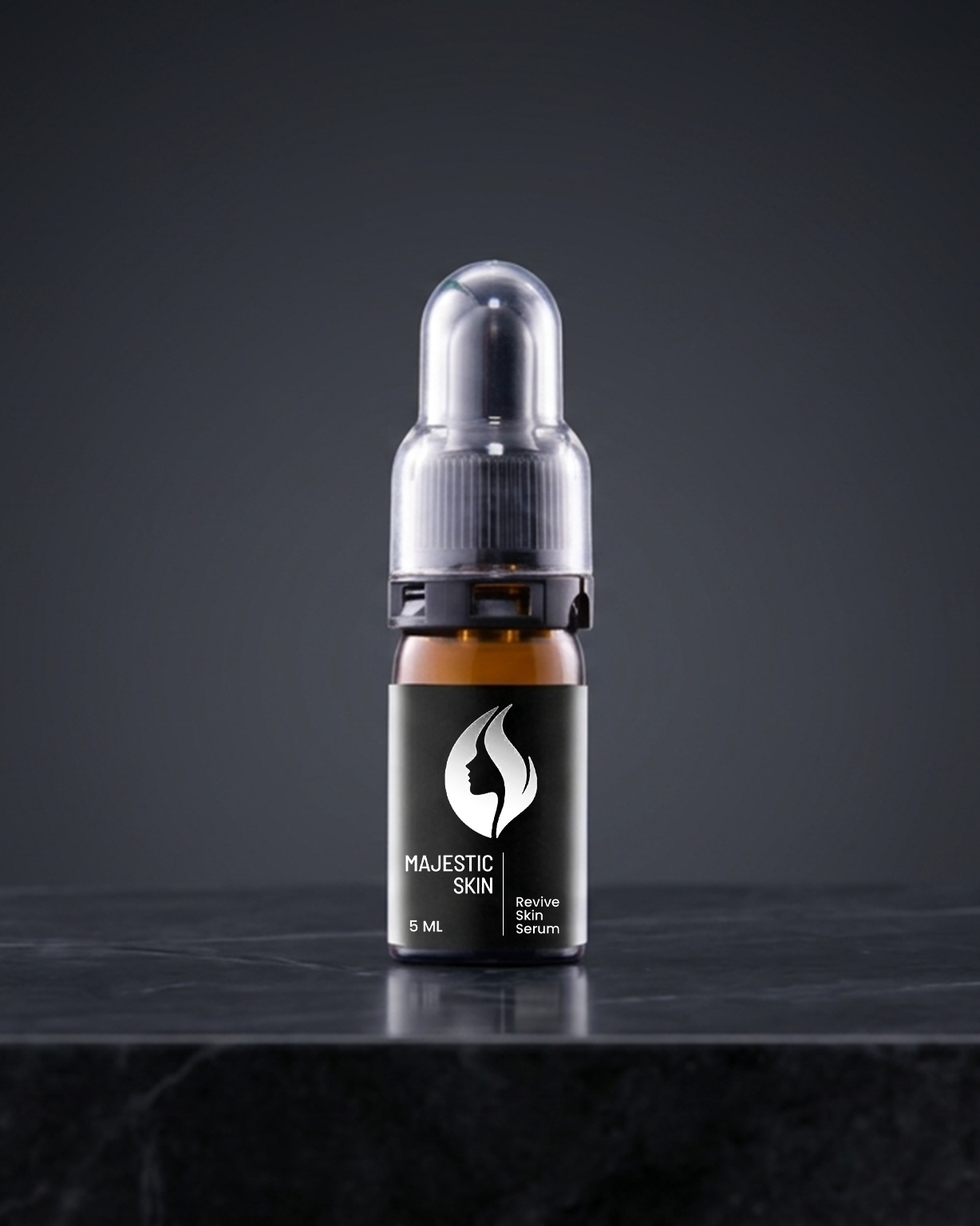
The development of Majestic Skin represents a direct translation of the scientific principles demonstrated in historical medical recovery breakthroughs into a practical, accessible skincare solution. By understanding how protected stem cell signaling arrays were able to rebuild tissue integrity, our research team identified the key molecular factors that could be harnessed to enhance the regenerative capacity of normal, aging skin.
The formulation process begins with the cultivation of human stem cells in precisely controlled laboratory conditions that optimize their production of beneficial factors. These cells are maintained in specialized media that encourages maximum secretion of growth factors, cytokines, and extracellular matrix components. The resulting conditioned media contains over 200 identified bioactive molecules, creating a complex mixture that closely mimics a natural regenerative environment.
The Japanese stem cell technology employed in the formulation process represents years of advancement in cell culture optimization and bioactive factor concentration. Our proprietary extraction and stabilization methods ensure that the delicate growth factors and signaling molecules retain their biological activity throughout the product's shelf life. To see how this system functions as a daily anchor, explore our comprehensive review of human stem cell derived signaling mechanisms, or examine product metrics on the primary Majestic Skin configuration architecture page.
Cellular and Scientific Mechanisms: How Regeneration Actually Works
The cellular mechanisms underlying skin regeneration involve precisely coordinated interactions between stem cells, their supporting microenvironment, and an intricate network of signaling molecules. By examining these mechanisms, we gain insight into how topical applications can enhance our skin's natural regenerative capacity.
The regeneration process begins with stem cell activation, triggered by specific molecular signals that indicate the need for tissue repair or renewal. In normal aging skin, these signals arise from accumulated cellular damage, environmental stressors, and the natural turnover process. Key signaling pathways include the Wnt pathway, which promotes stem cell proliferation, and the Notch pathway, which guides cellular differentiation.
Once activated, stem cells undergo controlled division, producing both new stem cells to maintain the population and committed progenitor cells that will differentiate into specialized skin cells. Growth factors such as EGF, FGF, and TGF-β play crucial roles in coordinating these decisions, determining whether cells continue dividing or begin differentiating. A critical aspect of successful regeneration is the maintenance of stem cell niches. When formulated properly, collagen production serum applications can provide external support for these niches, helping maintain the cellular environment necessary for optimal stem cell function.
Application Protocol and Guidelines
To protect delicate protein networks and maximize the absorption of growth factor signaling arrays daily, follow this sequence:
Morning Protocol Sequence
- Cleanse skin with a gentle, pH-balanced cleanser to remove contaminants. Pat dry, do not rub.
- Smooth 1-2 pumps of Majestic Skin evenly across the face and neck structure. Use light pressing motions.
- Wait 90 seconds for advanced delivery nanoparticles to settle before layering secondary products.
- Finish with a broad-spectrum SPF 30 or higher to insulate newly generated collagen matrix threads.
Nighttime Protocol Sequence
Execute a thorough double cleanse, then apply your human stem cell serum as noted above. Stem cell activity follows natural circadian repair rhythms, making nightly consistency essential. For advanced zone pressing, apply firm pressure for 5 seconds explicitly to deep periorbital and nasolabial folds to enhance localized delivery. For complete home care protocols built for long-term cell health parameters, explore our specialized options here: a streamlined lineup for long-term skin health.
Results Timeline and Expectations
The enhancement of human skin tissue architecture develops across targeted milestones based on natural cellular lifecycles:
- Weeks 1-2: Initial cellular activation. Skin texture optimizations show on the surface, hydration metrics level up, and overall comfort scales.
- Weeks 3-6: Acceleration of cell turnover. Visible smoothing of fine line networks and enhanced dermal radiance.
- Weeks 6-12: Structural matrix remodeling. Significant improvements manifest as skin bounce, firmness, and optimized elastic recoil.
- Months 3-6: Sustained corrective maturation. Dermal density values increase, and cellular housekeeping functions reach homeostatic stability.
Support Your Skin's Inherent Potential
Move beyond traditional surface-level patches. Provide your skin structure with complex biochemical communication blueprints using Majestic Skin.
Discover Majestic SkinFrequently Asked Questions
How do stem cell-derived skincare products compare to actual medical stem cell treatments?
Can stem cell skincare actually reverse aging, or does it just prevent further damage?
Are there any safety concerns with stem cell-derived skincare products?
How long does it take to see results from stem cell skincare treatments?
How is this different from a standard peptide serum?
Sources
- Hirsch, T., Rothoeft, T., Teig, N., et al. (2017). Regeneration of the entire human epidermis using transgenic stem cells. Nature, 551(7680), 327-332.
- Blanpain, C., & Fuchs, E. (2009). Epidermal homeostasis: a balancing act of stem cells in the skin. Nature Reviews Molecular Cell Biology, 10(3), 207-217.
- Keyes, B. E., Segal, J. P., Heller, E., et al. (2013). Nfatc1 orchestrates aging in hair follicle stem cells. Proceedings of the National Academy of Sciences, 110(51), E4950-E4959.
- Rompolas, P., Mesa, K. R., & Greco, V. (2013). Spatial organization within a niche as a determinant of stem-cell fate. Nature, 502(7472), 513-518.
- Goodell, M. A., & Rando, T. A. (2015). Stem cells and healthy aging. Science, 350(6265), 1199-1204.