.png?alt=media&token=78c23398-5711-460d-b21c-4a7177094ae4)
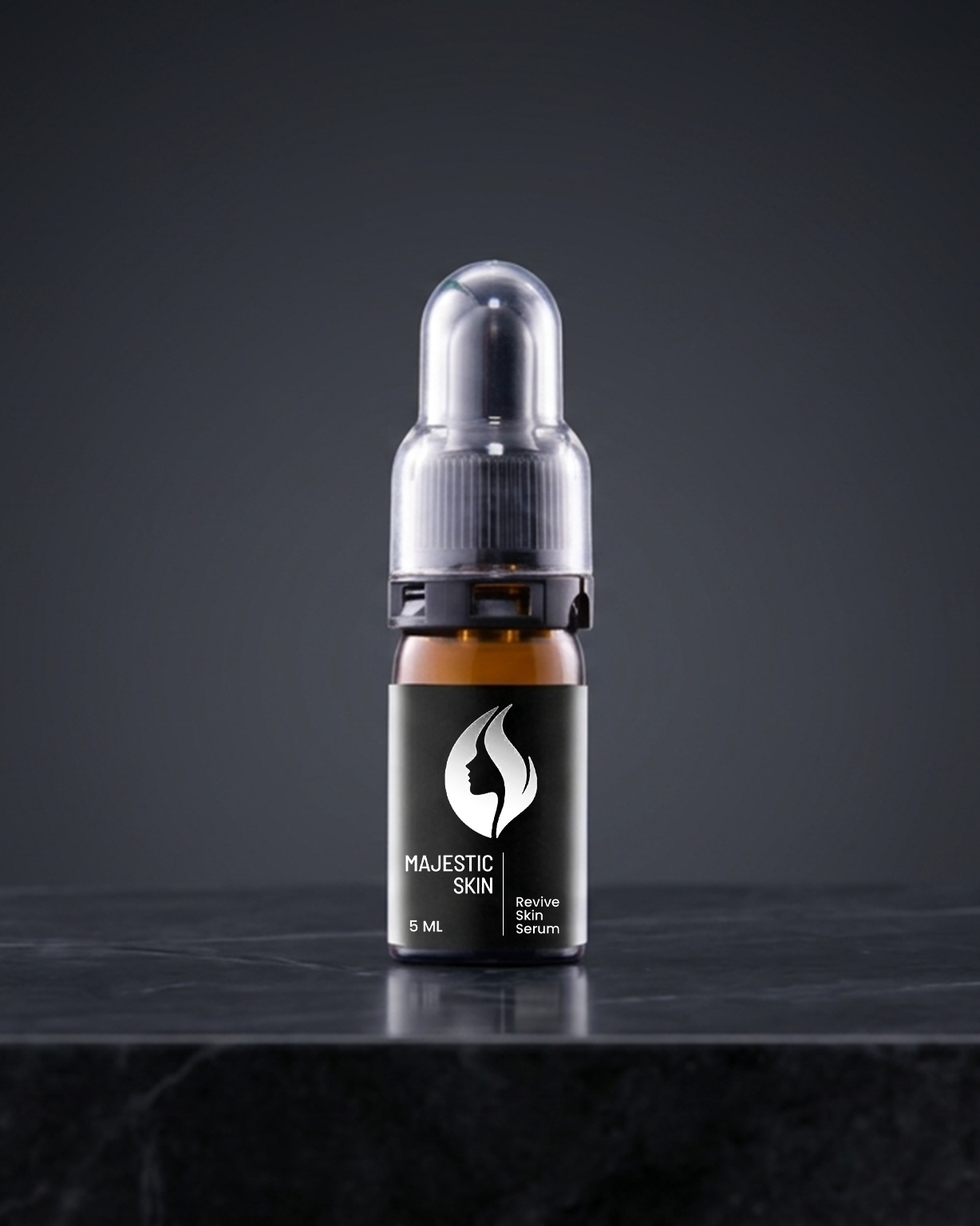
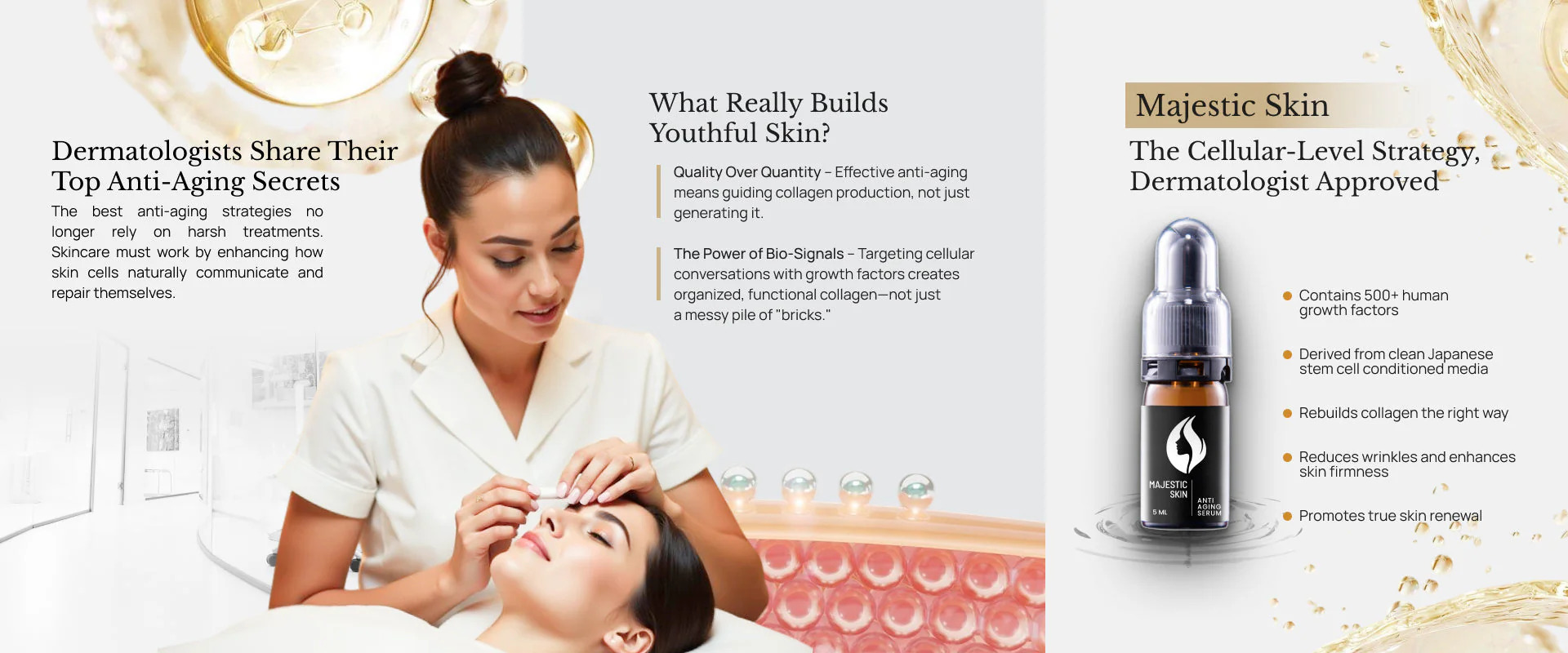
The Dermatological Consensus: Optimizing Fibroblast Recruitment via Cell-Free Secretome Arrays
Clinical Guide
- Secret #1: True Rejuvenation Starts with Cellular Conversation
- Secret #2: It's Quality Over Quantity for Wrinkle Reduction
- Why Majestic Skin Embodies the Dermatologist Consensus
- Your Expert Application Protocol for Maximum Results
In a world saturated with skincare trends and fleeting miracle ingredients, it can feel impossible to find a clear, trustworthy path to youthful skin. We are constantly bombarded with conflicting advice. One expert champions retinoids above all, another swears by vitamin C, while a third promotes the latest peptide complex. So, what do the world's leading dermatologists truly agree on when they discuss effective anti-aging strategies behind closed doors?
To cut through the noise, we synthesized the core principles from dozens of clinical papers, expert panels, and dermatological reviews. The consensus is surprisingly clear: the future of anti-aging isn't about harsh, aggressive treatments. It's about intelligent, precise communication with your skin cells. It’s about working with your skin’s natural regenerative power, not against it. This article unveils the key secrets that form the foundation of modern, expert-level skincare and explains why a dermatologist recommended anti-aging serum has less to do with a single "magic" ingredient and more to do with a comprehensive, cellular-level strategy a strategy perfectly embodied by the advanced science of Majestic Skin.
Secret #1: True Rejuvenation Starts with Cellular Conversation
For decades, the primary approach to anti-aging was rooted in controlled damage and exfoliation. Chemical peels, potent retinoids, and dermabrasion all work by removing the outer layers of the skin to trigger a healing response. While effective to a degree, dermatologists now recognize this as an outdated and often aggressive strategy. The modern, sophisticated approach focuses on something far more powerful: cellular communication.
Your skin cells are in constant dialogue. Younger skin's "conversation" is vibrant and efficient. Cells signal each other to produce collagen, repair DNA damage, and maintain the structural integrity of the skin. As we age, this communication network breaks down. Signals become weaker, less frequent, and misunderstood, leading to slower repair, thinning skin, and the formation of wrinkles.
The new frontier in dermatology is the use of bio-signals specifically growth factors and cytokines. These are the master proteins that act as messengers, telling cells what to do and when to do it. Think of them as the project managers of skin repair. They don't just provide raw materials; they provide instructions. This is precisely why the most advanced clinical treatments now utilize technologies that can re-introduce these critical messengers. A truly effective collagen production serum doesn't just stimulate; it orchestrates the entire process, ensuring the resulting collagen is healthy, organized, and functional.
Secret #2: It's Quality Over Quantity for Wrinkle Reduction
The term "collagen boosting" is everywhere, but it's a vast oversimplification. Leading dermatologists emphasize that creating a disorganized flood of weak collagen is not the goal. The real secret to diminishing deep-set wrinkles is rebuilding the skin's foundational matrix with high-quality, well-structured collagen and elastin fibers.
Imagine building a wall. You can have a massive pile of bricks (quantity), but without a skilled mason and a proper blueprint (quality and organization), you’ll end up with an unstable heap, not a strong wall. The same is true for your skin. This is where different ingredients show their limitations. While some ingredients can signal for more "bricks," only a select few can provide the "blueprint." This is what sets a standard serum apart from the best anti-aging serum for wrinkles. The goal is to encourage the formation of the strong, cross-linked Type I and Type III collagen that defines youthful skin architecture.
| Approach | Mechanism of Action | Limitations |
|---|---|---|
| Retinoids | Forces rapid cell turnover and signals collagen production. | Can cause significant irritation, redness, and peeling. Not well-tolerated by sensitive skin. |
| Vitamin C | Protects from free radical damage and is a cofactor in collagen synthesis. | Primarily protective. Limited ability to actively repair deep, existing damage. Highly unstable. |
| Peptides | Short-chain amino acids that act as single, specific signals (e.g., "make more collagen"). | Offers a single instruction, lacking the complex, multi-faceted signaling needed for comprehensive repair. |
| Human Stem Cell Media | Provides a complete ecosystem of hundreds of human growth factors and cytokines that orchestrate a symphony of repair and regeneration. | The highest tier of topical treatment, representing the forefront of regenerative science. |
Why Majestic Skin Embodies the Dermatologist Consensus
After reviewing the core principles of expert-level skincare, it becomes clear why forward-thinking dermatologists are championing the technology behind Majestic Skin. Our serum is not just another product; it is the culmination of these advanced scientific secrets. Majestic Skin leverages a potent, ethically sourced Human Stem Cell Serum derived from Japanese stem cell technology. The key is not the cells themselves, but the nutrient-rich conditioned media they are cultured in. This media contains a perfect, bio-identical cocktail of over 500 different human growth factors, cytokines, and interleukins.

Our formula restores the skin's entire communication network. Instead of shouting a single instruction like a peptide, it provides the full vocabulary of signals your cells need to repair damage, reduce inflammation, and behave like their younger versions. The complex blend of growth factors in our Japanese anti-aging serum doesn't just say "make collagen." It orchestrates the entire construction process, leading to the organized, robust collagen matrix that genuinely reduces wrinkles and improves skin density. This technology was born from regenerative medicine, providing your skin with the same powerful, bio-identical signaling molecules used in advanced clinical settings to promote healing and regeneration.
Your Expert Application Protocol for Maximum Results
To achieve the best possible outcome, integrate Majestic Skin into your routine with the precision of a clinical treatment plan. Consistency is key. Follow these steps morning and night:
- Step 1: Prepare the Canvas: Cleanse your skin thoroughly with a gentle, pH-balanced cleanser. Pat your skin dry. Avoid any harsh physical scrubs or toners with high alcohol content immediately before application.
- Step 2: The Regenerative Application: Dispense 1-2 pumps of Majestic Skin onto your fingertips. Gently press and smooth the serum evenly across your face, neck, and décolletage. Do not rub vigorously; let the serum absorb with minimal friction.
- Step 3: Target Key Areas: Apply a small extra amount by gently tapping it around areas of concern, such as crow's feet, frown lines, and nasolabial folds. The warmth of your fingers will aid absorption.
- Step 4: Seal and Protect: Wait 2-3 minutes for the serum to fully penetrate the skin. Follow with your favorite moisturizer to lock in the active ingredients and, if it's daytime, a broad-spectrum sunscreen with at least SPF 30. This final step is non-negotiable for protecting your investment.
Choose the Science of Cellular Strategy
Fostering intelligent, healthy cellular function is the most powerful path to ageless skin. Experience a clinical-level, regenerative transformation with Majestic Skin.
Discover Majestic SkinFrequently Asked Questions
Does a human stem cell serum contain actual live stem cells?
Is this technology fundamentally safe for topical use?
How does human conditioned media differ from a peptide serum?
How long until I see measurable structural results?
Can I use this product with my other skincare solutions, like retinol?
Sources
- Shapiro, S. S., & Saliou, C. (2001). Role of vitamins in skin care. Nutrition, 17(10), 839-844.
- An, Y., Li, L., et al. (2020). The role of adipose-derived stem cells in skin wound healing. Stem Cell Research & Therapy, 11(1), 1-13.
- Bar-Or, D., et al. (2000). A novel synthetic peptide for stimulating collagen I production in human fibroblasts. Journal of Biological Chemistry, 275(16), 12051-12055.