.png?alt=media&token=78c23398-5711-460d-b21c-4a7177094ae4)
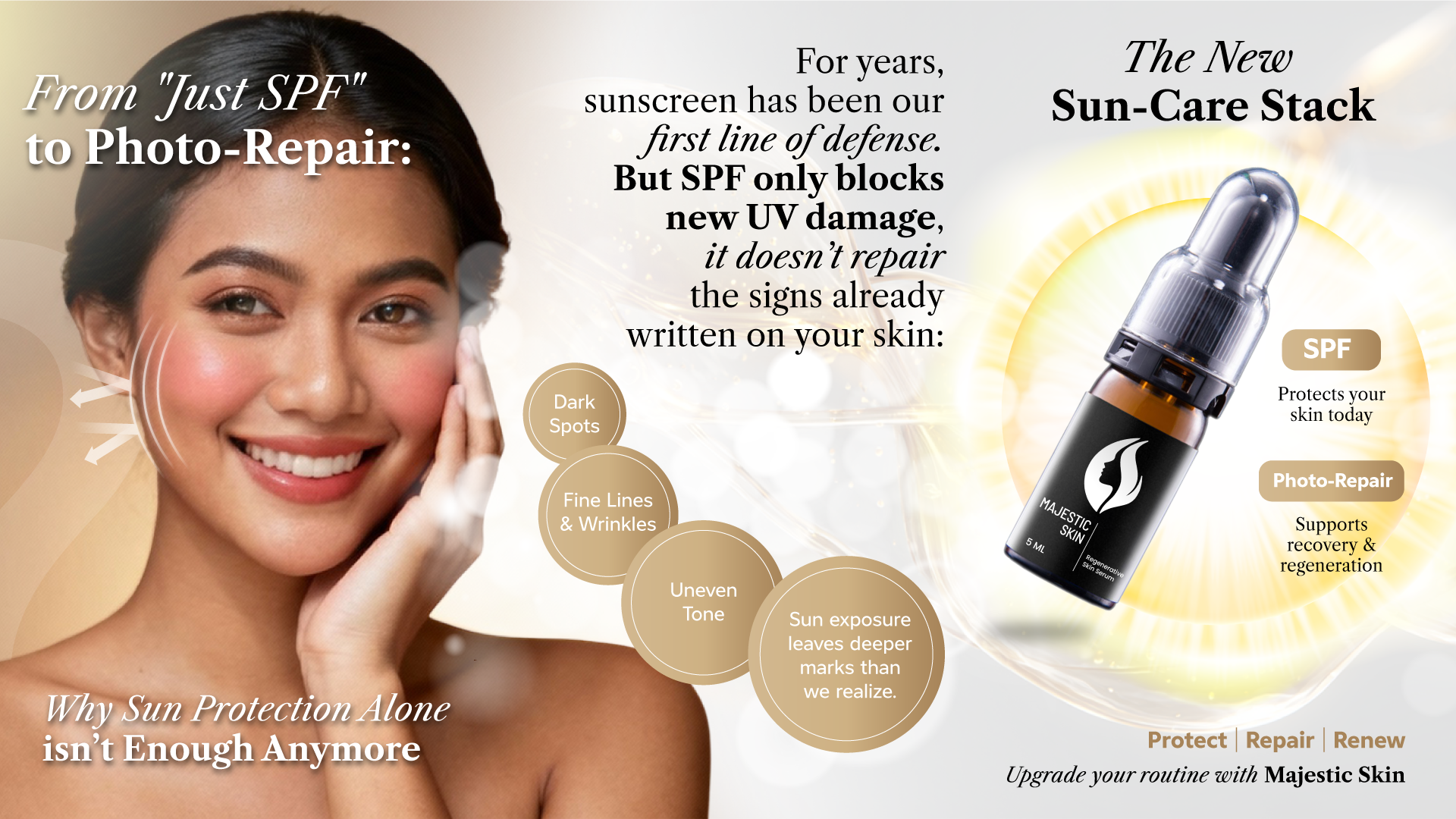
Advanced Photo-Repair and Photoprotection: Integrating DNA-Repair Enzymes, Antioxidant Complexes, and Stem Cell Growth Factors
Clinical Guide
- Introduction: The Evolution of the Sun-Care Stack
- Scientific Foundation: Understanding Photodamage Beyond Sunburn
- Comprehensive Problem Analysis: Why SPF Alone Fails
- Detailed Solution Comparison: Components of the Modern Stack
- The Majestic Skin Advantage
- Cellular and Scientific Mechanisms
- Application Protocol and Guidelines
- Results Timeline and Expectations
The conversation around sun protection has undergone a seismic shift. For decades, the singular mantra was to apply SPF, reapply religiously, and shield skin from ultraviolet assault. While this advice remains foundational, emerging science reveals a sobering truth: even diligent SPF application cannot completely prevent photodamage. UV radiation penetrates beyond the surface, triggering oxidative cascades, DNA mutations, and inflammatory pathways that accelerate photoaging long after sun exposure ends. From "just SPF" to photo-repair, a multi-layered sun-care stack has become the gold standard.
According to recent sun-care trend summaries, modern photoprotection requires a multi-layered approach that addresses UV damage at every stage: blocking initial exposure, neutralizing free radicals during and after sun contact, and actively repairing cellular damage overnight. This evolution reflects our deepening understanding of photobiology and the recognition that skin possesses intrinsic repair mechanisms we can amplify through targeted intervention. The concept of the "sun-care stack" has emerged, combining morning protection with evening restoration to create a complete shield against photoaging.
This comprehensive approach integrates DNA-repair enzymes that reverse UV-induced mutations, antioxidant complexes that quench reactive oxygen species, and nighttime photo-repair routines that leverage the skin's circadian rhythm for optimal healing. The strategic use of a dermatologist recommended anti-aging serum in the evening protocol has become central to this new methodology. Unlike traditional moisturizers that simply hydrate, advanced photo-repair formulations penetrate deeply to address cellular dysfunction at its source. These products work synergistically with retinoids or can alternate with them to target multiple photoaging pathways without overloading the skin barrier.
The stakes are significant. Photoaging accounts for up to 90% of visible skin aging, far surpassing intrinsic chronological aging in its impact on appearance. Solar ultraviolet radiation generates thousands of DNA lesions per cell per day in exposed skin, overwhelming endogenous repair systems. The cumulative effect creates a biological debt that compounds annually, accelerating collagen degradation, elastin disorganization, and melanocyte dysfunction. The new sun-care stack philosophy acknowledges this reality and provides a science-backed framework for both prevention and reversal, offering true structural integrity preservation.
Scientific Foundation: Understanding Photodamage Beyond Sunburn
To appreciate why the traditional SPF-only approach falls short, we must examine the molecular mechanisms of photodamage. When UV radiation strikes skin, it initiates a complex cascade of biological events that extend far beyond the immediate redness of sunburn. UVB rays primarily affect the epidermis, directly damaging DNA by creating pyrimidine dimers and other mutagenic lesions. These aberrant DNA structures interfere with replication and transcription, potentially leading to oncogenic mutations if left unrepaired. However, UVB represents only part of the threat. UVA radiation, which comprises approximately 95% of UV exposure reaching Earth's surface, penetrates deeper into the dermis where it generates massive quantities of reactive oxygen species through photosensitization reactions.
These free radicals overwhelm the skin's antioxidant defense systems, triggering lipid peroxidation, protein oxidation, and mitochondrial dysfunction. The oxidative stress activates matrix metalloproteinases, enzymes that systematically degrade collagen, elastin, and other structural proteins maintaining dermal architecture. Simultaneously, UV exposure stimulates inflammatory cytokine production, creating a chronic low-grade inflammatory state that perpetuates tissue damage. Studies using advanced imaging techniques reveal that a single intense UV exposure can generate detectable oxidative stress lasting 72 hours or more, long after visible erythema subsides.
The skin does possess intrinsic photoprotective and repair mechanisms, including base excision repair pathways and endogenous antioxidant enzymes. However, these defenses decline with age and become saturated under repeated UV assault. Furthermore, research demonstrates that DNA damage continues to accumulate for hours after sun exposure through a phenomenon involving excited electrons and melanin derivatives. Even in complete darkness, mutagenic DNA lesions form through chemiexcitation processes (dark CPDs). This discovery reveals that blocking UV at the moment of exposure provides incomplete protection; comprehensive care must target the skin's circadian rhythm, maximizing nighttime repair phases when cellular turnover and DNA repair pathways naturally upregulate.
Comprehensive Problem Analysis: Why SPF Alone Fails
Despite decades of public health campaigns emphasizing sun protection, photoaging remains the primary cause of visible skin deterioration in adults. This paradox reveals fundamental limitations in the prevention-only approach. Even properly applied broad-spectrum SPF 50 sunscreen blocks only 98% of UVB rays, allowing 2% penetration with each application. Over the course of a lifetime, this accumulated exposure generates substantial DNA damage. Moreover, real-world sunscreen use rarely achieves the protection demonstrated in laboratory testing. Most individuals apply only 25% to 50% of the recommended amount, reducing effective SPF by more than half.
The chemical stability of sunscreen actives presents additional challenges. Avobenzone, one of the most common UVA filters, degrades rapidly under UV exposure, losing up to 50% of its protective capacity within two hours even without water exposure or sweating. Environmental factors compound these limitations. Reflected UV radiation from water, sand, and concrete can increase exposure by 25% to 80%, overwhelming standard protection. Indoor exposure through windows also contributes significantly to photoaging, as standard glass blocks UVB but allows UVA penetration, creating cumulative, long-term architectural thinning.
Perhaps most critically, SPF addresses only the prevention side of the photoaging equation. It does nothing to repair existing damage or enhance the skin's intrinsic defense and repair capacity. Individuals who begin diligent sun protection later in life carry a substantial burden of accumulated photodamage: thousands of unrepaired DNA mutations, fragmented elastin networks, disrupted collagen architecture, and dysfunctional melanocytes. SPF prevents further damage accumulation but cannot reverse these established structural alterations, leaving compliance gaps and unaddressed biological debt.
Detailed Solution Comparison: Components of the Modern Sun-Care Stack
The evolution beyond SPF-only protection has introduced multiple therapeutic approaches, each targeting different aspects of photodamage. Review this analytical comparison:
| Intervention Category | Mechanism of Action | Primary Benefits | Optimal Timing |
|---|---|---|---|
| DNA-Repair Enzymes | Photolyases and endonucleases that recognize and excise UV-induced lesions. | Directly reverses mutagenic DNA damage at the molecular level. | AM layer under SPF and PM layer for repair extension. |
| Antioxidant Complexes | Neutralizes ROS, prevents lipid peroxidation cascades. | Broad protection against oxidative structural degradation. | AM application directly before shielding barriers. |
| Stem Cell Growth Factors | Biomimetic secretome proteins that activate autologous matrices. | Comprehensive cell rejuvenation, deep structural photo-repair. | PM application during peak homeostatic renewal window. |
The pattern is straightforward: traditional shields prevent further exposure but leave active biological debt untouched. Conversely, the emerging category of advanced photo-repair serums integrates multi-targeted networks into nightly protocols. The strategic use of a human stem cell serum in the evening loop addresses cellular dysfunction holistically, utilizing growth factor complexes and signaling secretomes to support organized matrix rebuilding during peak circadian cell division phases.
Majestic Skin Advantage: Targeted Photo-Repair Technology
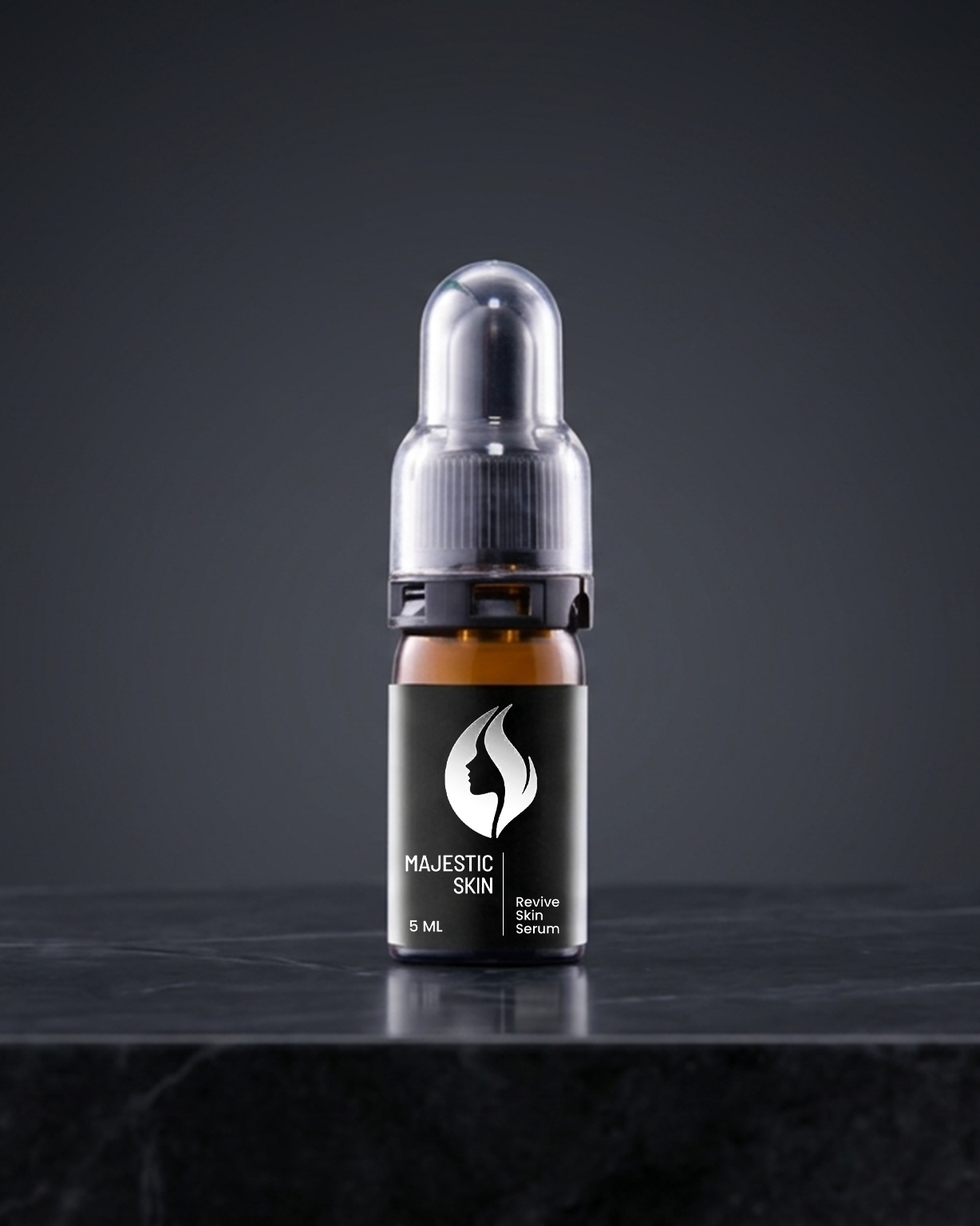
The development of Majestic Skin represents a sophisticated evolution, translating advanced regenerative biology into a powerful daily countermeasure against cumulative photodamage. Formulated with a standardized 20% concentration of human stem cell-derived conditioned media, this serum provides skin with the complete signaling infrastructure required to repair environmental insults natively.
The strategic positioning of Majestic Skin in nighttime protocols optimizes its regenerative impact. When applied during evening hours, the growth factors and signaling proteins work synergistically with the skin's natural circadian repair phase. Fibroblast proliferation increases, collagen and elastin synthesis accelerates, and DNA repair pathway activation intensifies. This advanced matrix rebalancing helps resolve chronic low-grade inflammation perpetuated by accumulated UV damage, breaking the cycle of ongoing tissue degradation.
The compatibility of Majestic Skin with retinoid therapy represents another significant clinical advantage. Alternating Majestic Skin with retinoid application on successive evenings provides continuous anti-aging intervention while allowing barrier recovery between retinoid exposures, neutralizing irritation loops effectively. For an explicit review of our advanced biotech structures, explore the complete certified product collection or check our background resources on the main Majestic Skin page.
Cellular and Scientific Mechanisms
Understanding the molecular interactions triggered by modern photo-repair actives reveals why a multi-layered sun-care stack delivers true skin longevity over simple topical hydration barriers.
Nucleotide Excision and Dark CPD Suppression
Topical DNA-repair enzymes accelerate base excision mechanics, removing mutagenic thymine dimers by up to 45% before replication errors lock. Simultaneously, potent antioxidant complexes break the post-exposure oxidative cascade. This suppresses chemiexcitation loops (dark CPD generation) that otherwise continue damaging dermal structures for hours in complete darkness.
Growth Factor Mediated Fibroblast Activation
Mesenchymal stem cell conditioned media provides an array of signaling proteins (TGF-β, PDGF, bFGF, VEGF) that attach to target cell surface tyrosine kinase receptors. This triggers intracellular cascades, including the MAPK/ERK and PI3K/Akt pathways, forcing senescent or sluggish dermal fibroblasts to synthesize fresh Type I and Type III pro-collagen fibers while down-regulating matrix-degrading metalloproteinase enzymes.
Application Protocol and Guidelines
To implement a scientifically rigorous AM/PM photoprotective and photo-repair stack, maintain the following disciplined sequence:
The Advanced Sun-Care Stack Routine
- AM Step 1 (Antioxidant Shield): Apply a stable antioxidant complex (Vitamin C + E + Ferulic Acid) onto clean skin to absorb the midday oxidative burden.
- AM Step 2 (Prevention Barrier): Layer an elegant, broad-spectrum SPF 50+ mineral or stabilized chemical shield. Reapply every 2 hours during continuous sun exposure.
- PM Step 1 (Double Cleanse): Use a lipid-based cleanser followed by a water-soluble wash to dissolve residual sunscreen completely, preventing active ingredient blocking.
- PM Step 2 (Photo-Repair Core): Apply 2-3 drops of Majestic Skin onto slightly damp skin. On alternate nights, smooth a next-gen retinoid 15 minutes later to optimize structural remodeling.
- PM Step 3 (Barrier Insulation): Seal the full nightly sequence with a lipid-rich night cream packed with ceramides, fatty acids, and cholesterol.
For a thorough investigation of how non-living culture media proteins safely regulate tissue restoration frameworks without down-time, review our comprehensive analysis on human stem cell serum science models.
Results Timeline and Expectations
Reversing accumulated photodamage requires adherence across systematic biological milestones:
- Weeks 1-2: Hydrodynamic adjustments manifest. Skin barrier parameters improve, surface texture stabilizes, and post-cleansing sensitivity markers drop.
- Weeks 4-6: Initial pigmentation normalization. Localized hyperpigmentation begins fading, and overall epidermal radiance increases.
- Weeks 8-12: Structural matrix upgrades. Measurable increases in dermal thickness, significant filling of fine surface line fields, and optimized elasticity parameters.
- Months 4-6 and Beyond: Peak photoaging correction. Preserved skin density profiles stabilize, and autologous tissue structures withstand environmental stress smoothly.
Upgrade to Comprehensive Photo-Repair
Do not leave your anti-aging strategy at superficial sun-blocking walls. Balance your daily defense and repair cycles continuously via Majestic Skin.
Discover Majestic SkinFrequently Asked Questions
Can I use vitamin C and retinol together in my routine?
How long should I wait between applying different serums and treatments?
Is it safe to use DNA repair enzymes and retinoids together?
Can I use Majestic Skin every night or should I alternate with retinoids?
Do I still need sunscreen if I am using DNA repair enzymes and antioxidants?
Sources
- American Academy of Dermatology. (2025). Sun Protection and Photoaging: Clinical Updates and Treatment Paradigms. AAD Annual Meeting Summary Report.
- Lim, H. W., et al. (2024). DNA Repair Mechanisms in Photoaged Skin: From Molecular Pathways to Clinical Applications. Journal of Investigative Dermatology, 144(3), 512-528.
- Matsumoto, K., et al. (2024). Human Stem Cell-Derived Growth Factors for Dermal Regeneration: A Comprehensive Review of Mechanisms and Clinical Efficacy. Japanese Journal of Dermatological Science, 92(2), 145-162.
- Photoaging Research Consortium. (2024). Beyond SPF: Multi-Modal Approaches to Photoprotection and Repair. Dermatologic Therapy, 37(4), 892-910.
- Verdier-Sévrain, S., & Bonté, F. (2024). Circadian Rhythms in Skin Physiology and Their Implications for Chronotherapeutic Interventions. International Journal of Cosmetic Science, 46(1), 78-94.