.png?alt=media&token=78c23398-5711-460d-b21c-4a7177094ae4)
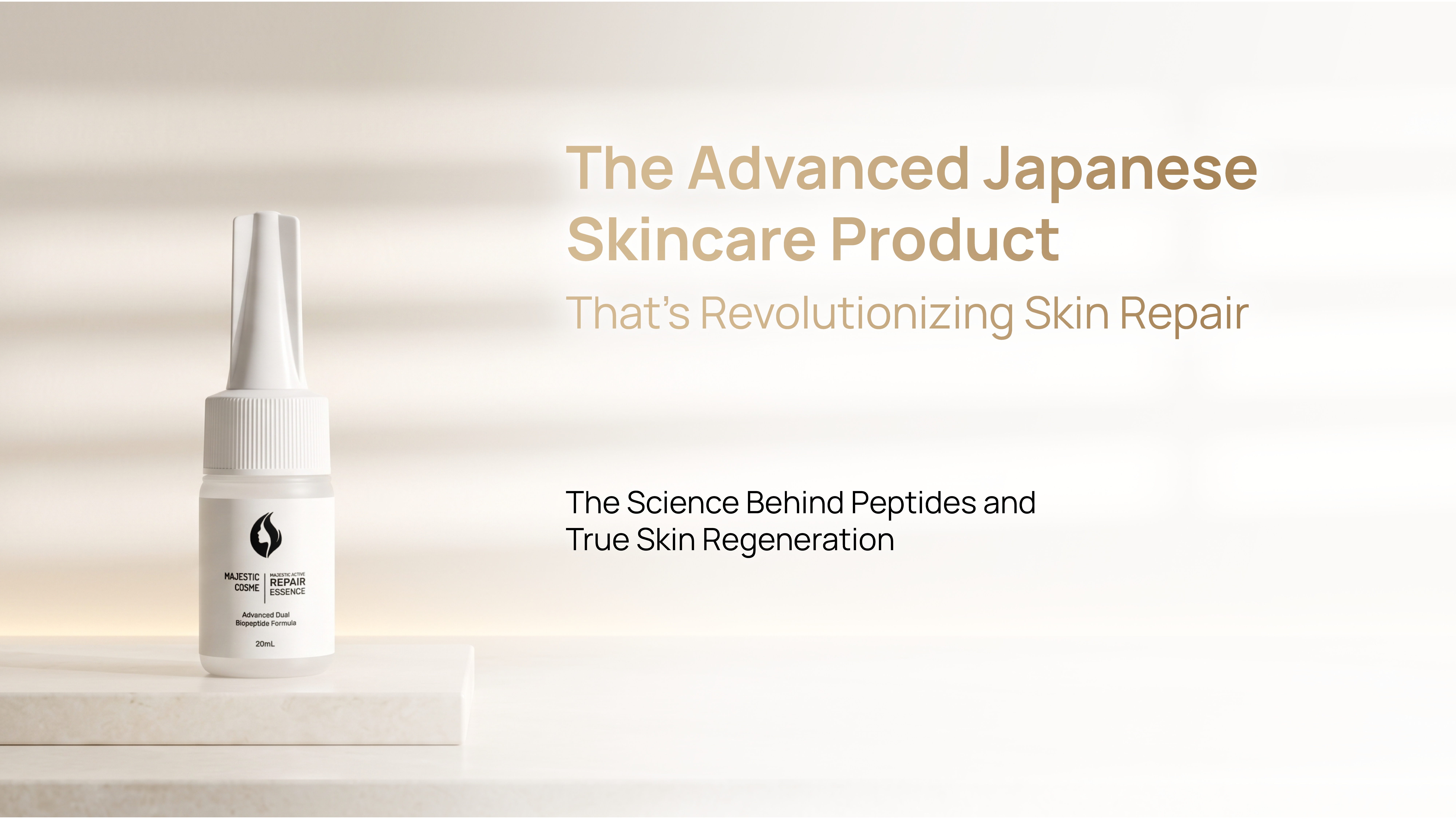
What Is Regenerative Skincare? The Ultimate Guide to Advanced Skin Repair
Clinical Guide
- What is regenerative skincare?
- How cellular regeneration transforms skin health
- The role of advanced peptides in skin repair
- Majestic Active Repair: A new era of regenerative science
- Targeting acne scars, wrinkles, and texture with regeneration
- Is regenerative skincare right for your skin concerns?
- How to start your regenerative skincare journey
- Frequently Asked Questions
- Sources
Regenerative skincare is a category of advanced skincare that works by stimulating the skin's own biological repair systems at the cellular level, rather than simply treating visible symptoms on the surface. Instead of relying on exfoliation or occlusive hydration, regenerative formulations use bio-peptides, complexes of bioactive proteins, and targeted signaling molecules to instruct skin cells to produce new collagen, accelerate tissue healing, and restore barrier function from within.
To understand what makes regenerative skincare different, it helps to first understand what most conventional skincare is actually doing. The majority of anti-aging and acne products work at the surface of the skin. Exfoliating acids remove dead cells. Moisturizers create a barrier that slows water loss. Retinoids accelerate cell shedding to reveal fresher skin underneath. These approaches can produce visible improvements, but they operate on the outermost layers of the skin, the stratum corneum, where dead cells and surface sebum live.
What is regenerative skincare?
Regenerative skincare goes deeper. It targets the living cells in the epidermis and dermis: keratinocytes that form the barrier, fibroblasts that produce collagen and elastin, and sebaceous cells that regulate oil. By delivering precise biological signals to these cells, regenerative formulations do not just manage how skin looks. They change how skin behaves.
This distinction is the core of what makes regenerative skincare a genuinely new category rather than a marketing repositioning of familiar ingredients.
How cellular regeneration transforms skin health
Every visible quality of healthy skin, its smoothness, firmness, even tone, and resilience, is an expression of how well the skin's underlying cells are functioning. When those cells are communicating effectively, producing structural proteins at the right rate, and renewing themselves on a healthy cycle, the skin reflects that health at the surface.
As skin ages, or after repeated episodes of acne-related inflammation, these cellular systems begin to slow or become disorganized. Fibroblasts produce less collagen. Cell turnover slows, leaving older, more textured cells at the surface longer. The barrier becomes less effective at retaining moisture. These are not cosmetic problems. They are biological ones, and they require biological solutions.
Skin aging and acne damage are both failures of cellular communication. The cells still have the capacity to repair themselves. What they often lack is a clear signal to do so.
Cellular regeneration refers to the process of restoring these biological functions through targeted molecular intervention. In regenerative skincare, this is accomplished with bio-peptides and complexes of bioactive proteins that bind to specific cell surface receptors and trigger the responses associated with repair: collagen synthesis, accelerated epidermal turnover, regulated sebum production, and tissue healing at the site of inflammatory damage.
The result is not a temporary change in how skin looks. It is a progressive improvement in how skin functions, which produces lasting, compounding results over time.
| Approach | Where It Works | Mechanism | Result |
|---|---|---|---|
| Traditional skincare | Stratum corneum (surface) | Exfoliation, occlusion, or forced surface shedding | Temporary improvement in appearance; results stop when product stops |
| Regenerative skincare | Epidermis and dermis (living cell layers) | Bio-peptide and complex of bioactive protein receptor binding; cellular signal delivery | Progressive structural improvement; results compound over time |
The role of advanced peptides in skin repair
Peptides are short chains of amino acids, the molecular building blocks of proteins. In the skin, specific peptide sequences function as biological messengers: they bind to receptors on the surface of skin cells and deliver instructions that trigger precise cellular responses.
This is what makes peptides central to regenerative skincare. Unlike chemical actives that force cellular behavior through disruption, peptides work through the same signaling language that the skin already uses to regulate itself. They do not override the skin's biology. They speak to it.
Not all peptides work the same way. Different sequences target different biological functions, which is why the most advanced regenerative formulas pair multiple complementary peptides rather than relying on a single active.
EGF (Human Oligopeptide-1): The Cellular Renewal Signal
EGF, or Epidermal Growth Factor, is a Nobel Prize-winning discovery that has transformed our understanding of how cells proliferate and heal. In the skin, EGF binds to EGF receptors (EGFR) on the surface of keratinocytes and fibroblasts, activating a cascade that instructs these cells to divide, migrate, and differentiate.
For skin repair, this translates to three measurable outcomes. At the epidermal level, EGF accelerates the replacement of damaged surface cells with new, healthy ones, a process called skin cell turnover that naturally slows with age and disruption. At the dermal level, EGF signals fibroblasts to increase their output of collagen, elastin, and glycosaminoglycans, the structural proteins that give skin its firmness and bounce. For post-acne and post-inflammatory skin specifically, EGF's ability to speed the repair of damaged tissue at the site of a former lesion makes it directly relevant to reducing visible marks and restoring even texture.
The critical distinction of EGF as a regenerative ingredient is that it achieves cell renewal without provoking the skin. It does not strip the barrier or generate inflammation to produce results. It presents a signal that the skin is already programmed to respond to positively.
Copper Peptide (GHK-Cu Complex): The Structural Protector and Rebuilder
Copper Peptide, specifically the GHK-Cu tripeptide-copper chelate, is one of the most extensively studied regenerative actives in cosmeceutical science. Its role in skin repair operates through two distinct and complementary mechanisms.
First, Copper Peptide stimulates fibroblast activity and supports the synthesis of collagen and elastin in the dermis. This directly addresses the structural protein loss that produces rough texture, lax skin, and the indented scarring associated with severe acne. Where EGF signals the repair process, Copper Peptide helps ensure the structural output of that process is maintained and protected.
Second, Copper Peptide provides powerful antioxidant action through its role as a cofactor for superoxide dismutase and ceruloplasmin, two of the skin's primary endogenous antioxidant enzymes. Inflammation, whether from acne or environmental stress, generates free radicals that degrade existing collagen and elastin. By reinforcing the skin's antioxidant defense at the dermal level, Copper Peptide protects the structural proteins that the regenerative process is simultaneously rebuilding. This protective dimension is what makes it a true regenerative active rather than simply a collagen-boosting ingredient.
Together, EGF and Copper Peptide represent the regenerative core of advanced skincare: one accelerates the biological process of renewal and repair, the other protects and amplifies the structural outcomes of that process.
Majestic Active Repair: A new era of regenerative science
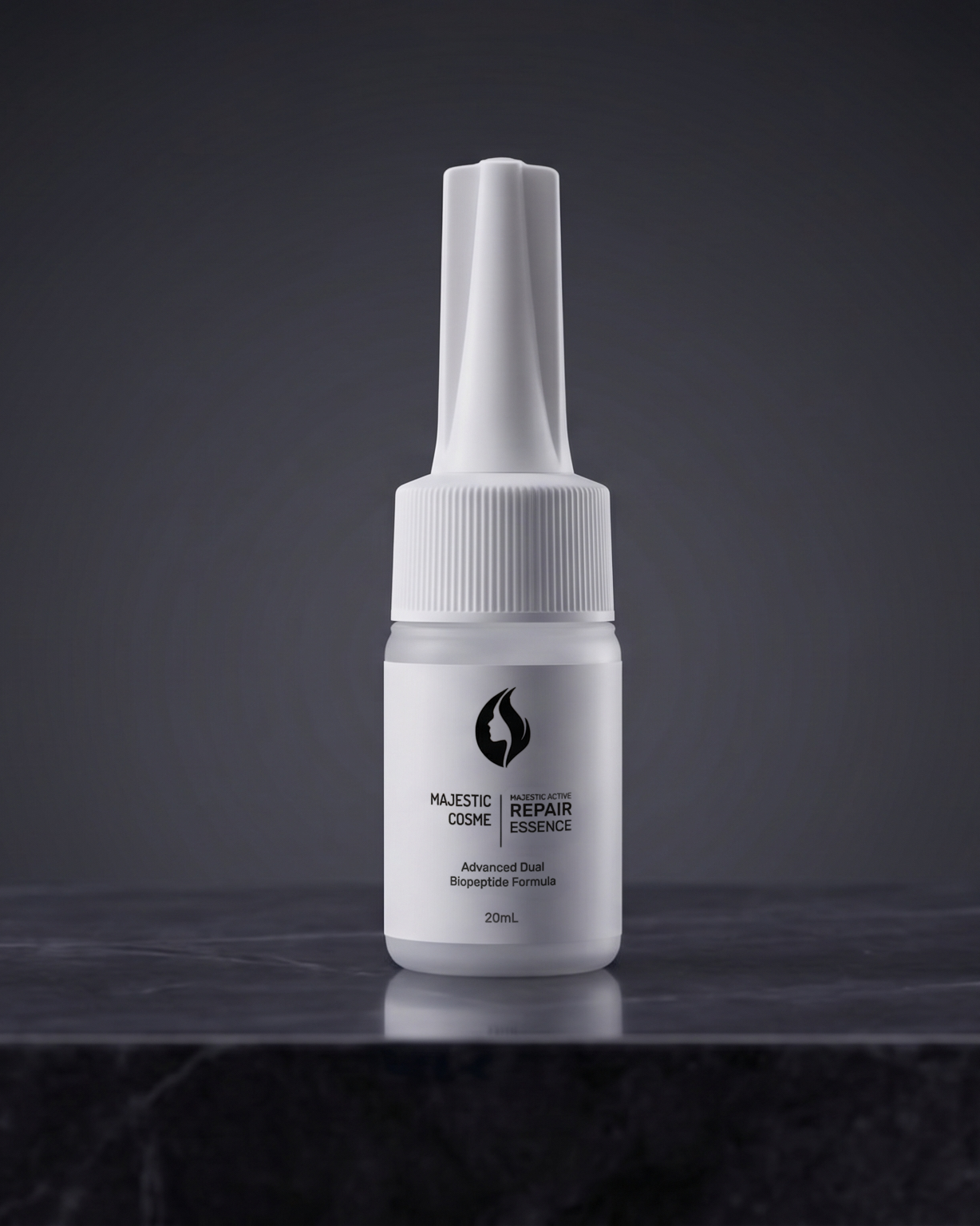
Majestic Active Repair Essence was developed at Majestic Cosme Laboratories in Japan as a direct application of regenerative skincare principles to the specific challenge of complex adult skin: skin managing active acne, post-inflammatory damage, early structural aging, and compromised barrier function, often simultaneously.
The formula combines EGF and Copper Peptide with two world-first biopeptides, Acnobet (Salicyloyl Octapeptide-9) and Hairen (Azelaoyl Tripeptide-1), that address the earlier stages of the acne and skin damage cycle: excess sebum production, pore blockage, and bacterial activity. This four-active system produces a complete regenerative intervention that covers the full biological sequence from damage initiation to structural repair.
The science behind how these four peptides selected to address each stage of acne progression is rooted in decades of molecular research, and the full story of that research journey is documented in the Majestic Cosme story.
Critically, all four actives are delivered through a 100% Nano-Solution system that reduces them to nano-sized particles, allowing them to pass through the follicle opening and reach the dermal and sebaceous layers where their receptor targets are located. This delivery precision is what distinguishes Majestic Active Repair from conventional peptide serums that remain at the surface: the regenerative signals actually reach the cells they are designed to communicate with.
The formula is free from fragrance, color additives, alcohol, and parabens. Every formulation decision reflects the same principle: exclude anything that does not serve a biological purpose, and include everything that does.
Targeting acne scars, wrinkles, and texture with regeneration
Regenerative skincare is not a single-concern solution. Because it operates through cellular mechanisms that govern multiple aspects of skin quality, EGF and Copper Peptide address several of the most common and persistent skin concerns simultaneously.
For post-acne scars and marks, EGF accelerates the replacement of surface cells carrying post-inflammatory discoloration, while Copper Peptide stimulates the collagen synthesis that gradually fills atrophic indentations and restores smooth texture. The full biological picture of what happens to skin after acne clears, and why conventional treatments leave this damage unaddressed, is explored in our guide to adult acne aftermath and skincare from Japan.
For textural roughness and uneven surface quality, EGF-driven cell turnover replaces slower-renewing, textured surface cells with new, normally-functioning ones. This produces smoother texture not through exfoliation that strips the barrier, but through genuine renewal of the cells forming the skin surface.
For early structural aging, loss of firmness, elasticity, and volume, Copper Peptide's fibroblast-stimulating activity and collagen synthesis support provide the structural building blocks that declining skin function no longer produces at adequate rates. Combined with EGF's signaling of biological protein matrices, the result is a progressive improvement in the underlying dermis that surface treatments cannot reach.
Clinical results from consistent use of Majestic Active Repair Essence reflect this multi-dimensional impact: acne-affected area reduced to less than 30% of its original size within 20 days, a 40% reduction in total pimple count after 30 days, and approximately 83% reduction in acne bacteria with ongoing use. The structural improvements, including scar fading, improved firmness, and smoother texture, develop progressively over 60 to 90 days as the full collagen synthesis cycle driven by EGF and Copper Peptide completes. The four-stage acne intervention model behind these outcomes is detailed in our four-stage acne intervention guide.
Is regenerative skincare right for your skin concerns?
Regenerative skincare is broadly relevant, but it is particularly well-suited to specific skin concerns where the conventional approach of surface treatment has proven insufficient.
Regenerative skincare is less suited as a standalone approach for someone seeking purely temporary cosmetic improvements, such as immediate surface glow or short-term pore minimization, since its primary benefits develop progressively over weeks and months as genuine biological change accumulates. For those concerns, conventional surface treatments may remain appropriate as a complement.
How to start your regenerative skincare journey
Beginning a regenerative skincare routine requires less complexity than many consumers expect. Because regenerative actives work with the skin's biology rather than against it, they integrate naturally into most existing routines without the careful sequencing and off-period management that aggressive actives require.
The essential principles for starting with Majestic Active Repair Essence:
- Apply to clean, bare skin as the absolute first step in your routine, morning and evening, immediately after cleansing. The 100% Nano-Solution requires direct follicle contact to penetrate at full efficiency. Any prior product layer reduces this penetration significantly.
- Allow 30 to 60 seconds for full absorption before layering moisturizer, SPF in the morning, or any other products.
- Commit to consistency. Regenerative results are biological, not cosmetic. Surface improvements develop within 20 to 30 days. Structural outcomes, including scar fading and improved firmness, develop over 60 to 90 days. Results compound with continued use.
- Protect the progress. UV exposure degrades collagen and elastin, directly undoing the structural work that EGF and Copper Peptide produce. Daily SPF is not optional for anyone using regenerative skincare.
The formula is compatible with most existing skincare routines. For those currently using retinoids or chemical exfoliants, apply the essence first on bare skin with full absorption time, then layer other actives on top, or alternate between them on different evenings to manage cumulative barrier load.
Experience the Power of Regenerative Skincare
Discover Majestic Active Repair and begin building the biological foundation of genuinely healthy, structurally resilient skin.
Discover Majestic Active RepairFrequently Asked Questions
Sources
- Haratake, A., et al. (2005). Epidermal Growth Factor improves skin barrier function and epidermal permeability barrier homeostasis. Journal of Investigative Dermatology, 125(4), 732-741. [https://doi.org/10.1111/j.0022-202X.2005.23878.x](https://doi.org/10.1111/j.0022-202X.2005.23878.x)
- Pickart, L., & Margolina, A. (2018). Regenerative and Protective Actions of the GHK-Cu Peptide in Human Skin. International Journal of Molecular Sciences, 19(7), 1987. [https://doi.org/10.3390/ijms19071987](https://doi.org/10.3390/ijms19071987)
- Schagen, S.K. (2017). Topical Peptide Treatments with Effective Anti-Aging Results. Cosmetics, 4(2), 16. [https://doi.org/10.3390/cosmetics4020016](https://doi.org/10.3390/cosmetics4020016)
- Varani, J., et al. (2006). Decreased collagen production in chronologically aged skin. American Journal of Pathology, 168(6), 1861-1868. [https://doi.org/10.2353/ajpath.2006.051302](https://doi.org/10.2353/ajpath.2006.051302)
- Gorouhi, F., & Maibach, H.I. (2009). Role of topical peptides in preventing or treating aged skin. International Journal of Cosmetic Science, 31(5), 327-345. [https://doi.org/10.1111/j.1468-2494.2009.00490.x](https://doi.org/10.1111/j.1468-2494.2009.00490.x)